Overview
Date Of Birth: January 5, 1946
Real Name: Diane Hall
Height: Not reliably published
Born: Los Angeles, California, United States
Occupations: Actress; director; author
Notable achievement: Academy Award for Best Actress, Annie Hall (1977)
Mini Bio
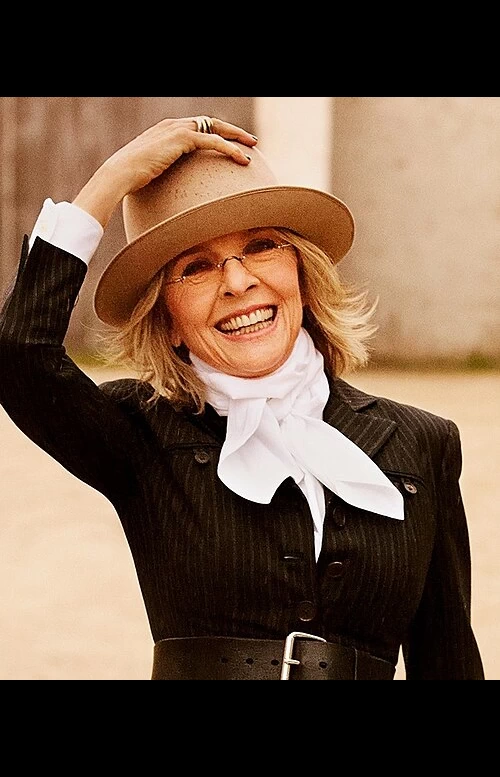
Diane Keaton emerged as a defining American actress of the late 20th century, balancing astute comic timing with penetrating dramatic sensibility. While her 1970s breakthroughs with Woody Allen established her as a nimble, idiosyncratic performer, the 1980s confirmed her as a versatile leading presence capable of carrying both prestige projects and popular comedies. In Reds (1981) she anchored a historic ensemble, while Baby Boom (1987) demonstrated broad audience appeal with warmth and wit. Her work across the decade—The Little Drummer Girl (1984), Crimes of the Heart (1986), and other high-profile films—solidified her reputation as a fearless, multi-faceted talent who could inhabit complex women on screen. Keaton’s sustained appeal and fearless reinvention helped shape a generation of performers who blend artistry with accessibility, maintaining her status as a cultural touchstone well into the 1990s and beyond.
... Diane Keaton was born Diane Hall in Los Angeles and trained at the Neighborhood Playhouse in New York, where she studied under the Meisner technique. She began on stage, notably in Hair (1968) and Play It Again, Sam (1969), before breaking through in The Godfather cycle as Kay Adams. Her 1977 triumph in Annie Hall cemented her status as a leading actress who could fuse wit with vulnerability, frequently collaborating with Woody Allen. The 1980s showcased a broader range: Reds (1981) solidified her as a dramatic force; The Little Drummer Girl (1984) and Crimes of the Heart (1986) highlighted her versatility, while Baby Boom (1987) underscored her capacity for mainstream charm. Beyond acting, Keaton directed Heaven (1987) and later films such as Hanging Up (2000); she published photography books and a memoir, Then Again (2011). Her enduring influence extends to fashion, photography, and film, marking her as a pioneer of longevity and reinvention in Hollywood." Then & Now The 1980s Throughout the 1980s Keaton moved beyond her Woody Allen breakthroughs to confirm herself as a versatile leading presence, combining comic precision with dramatic weight. She anchored the ambitious ensemble of Reds (1981) and won broad popular appeal with the warm, witty Baby Boom (1987), while roles in The Little Drummer Girl (1984), Crimes of the Heart (1986) and other high‑profile films showcased her ability to inhabit complex, often unconventional women. That decade solidified her reputation as a fearless, multi‑faceted performer whose blend of artistry and accessibility influenced a generation of actors. Now (2026) As of 2026 Keaton remains a celebrated cultural figure who continues to work selectively on screen while nurturing parallel interests in photography, writing and design, and occasionally producing projects that reflect her longstanding aesthetic interests. She appears periodically in character roles and public conversations about film and craft, even as her long body of work is continually reassessed by critics and audiences. Her lasting legacy is that melding of sharp comic timing with penetrating dramatic sensibility, which has made her both an enduring star and a touchstone for actors balancing art and popular appeal. Career timeline 1946 Born Diane Hall in Los Angeles, California. 1968 Began on Broadway as an understudy in Hair. 1969 Appeared in Woody Allen’s Play It Again, Sam on Broadway; earned a Tony Award nomination. 1972 Breakthrough as Kay Adams in The Godfather; began a prolific screen partnership with Al Pacino. 1977 Won the Academy Award for Best Actress for Annie Hall; established herself as a leading light of New Hollywood. 1979 Starred in Manhattan, continuing her collaboration with Allen. 1981 Lead in Reds, continuing a high-profile filmography with Warren Beatty. 1982 Appeared in Shoot the Moon, a domestic drama opposite Albert Finney. 1984 Featured in The Little Drummer Girl, expanding into thriller territory. 1987 Headlined Baby Boom, a popular comedy hit. 1991 Starred in Father of the Bride as Nina Banks; solidified box-office presence with the sequel. 1996 Cited as a leading ensemble presences in The First Wives Club, a defining late-90s comedy. Interview and reference sources Keaton memorised the entire script before you start doing the movie.Diane Keaton - Wikipedia She approaches a script sort of like a play in that she has the entire script memorized before you start doing the movie.Jack Nicholson quote about Keaton I always need the help of everyone for a wonderful performance.Diane Keaton - Wikipedia Biographical and credit details were checked against Diane Keaton - Wikipedia, Diane Keaton - Wikiquote, Diane Keaton’s career and quotes (source compilation).