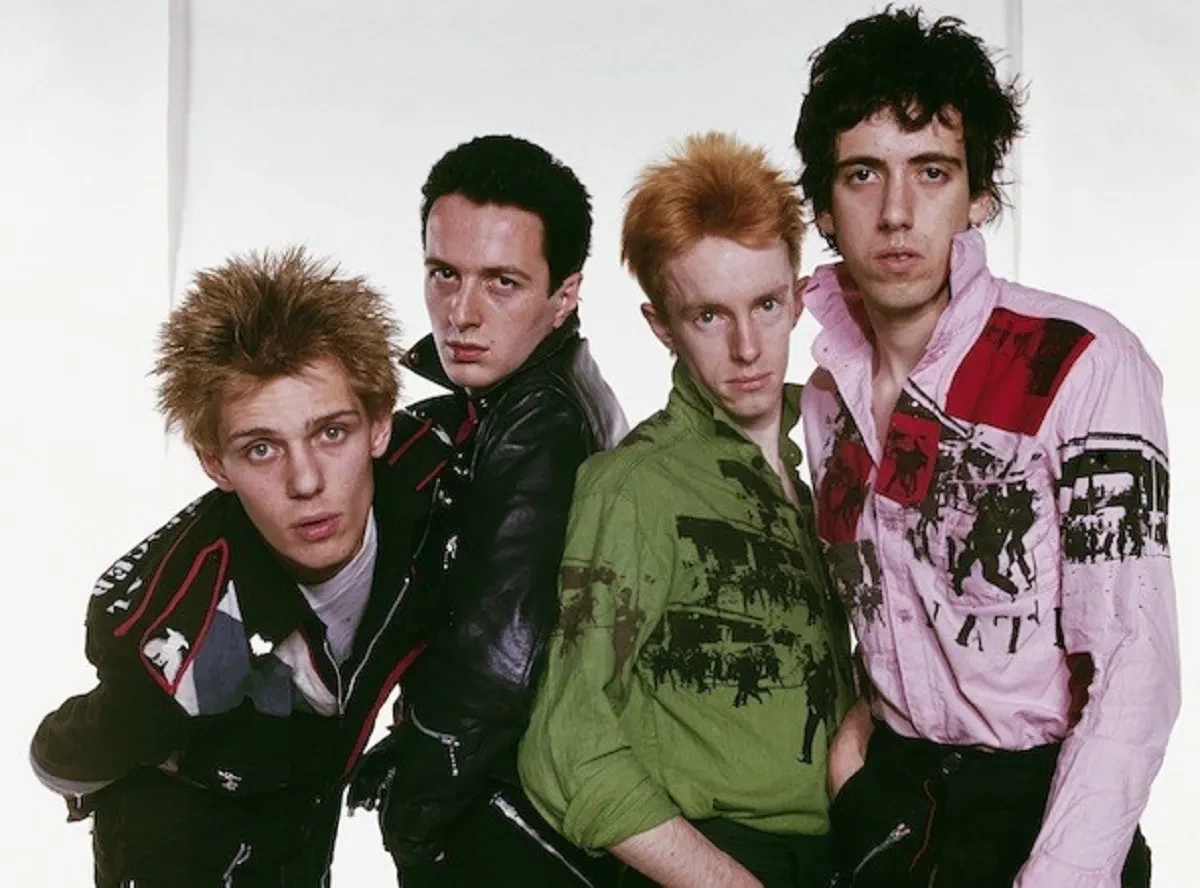
The Clash

Real Name: Joe Strummer, Mick Jones, Paul Simonon, Topper Headon

Date of Birth / Formation: 1976, London, England

Age / Status: Disbanded 1986

Primary genres: Punk rock, with strong reggae, ska, dub, funk and post‑punk influences

Core lineup (recording era): Joe Strummer, Mick Jones, Paul Simonon, Nicky 'Topper' Headon

Active period: Formed 1976 — disbanded 1986

Notable albums: The Clash (1977); London Calling (1979); Sandinista! (1980); Combat Rock (1982)

The Clash were a British punk rock band formed in London in 1976, often described as "the only band that matters" for their uncompromising political stance and musical ambition. While rooted in punk, the band incorporated reggae, ska, rockabilly, funk, and hip hop into their sound, making them one of the most eclectic and influential acts of their era. Their 1980 triple album "Sandinista!" and the 1982 hit "Should I Stay or Should I Go" and "Rock the Casbah" brought them mainstream success in the 1980s. "Combat Rock" (1982) became their best-selling album, reaching the top ten in both the UK and US. The Clash's fusion of punk energy with world music influences and socially conscious lyrics left an indelible mark on rock, punk, and alternative music that continues to resonate today.

Formation and 1980s development

Roots in the London punk scene

Formed in 1976, The Clash coalesced around Joe Strummer and Mick Jones with Paul Simonon and a succession of drummers before Nicky "Topper" Headon joined. Managed by Bernard Rhodes, they married punk urgency to reggae and political themes. A rapid string of gigs and early singles such as "White Riot" and "Complete Control" established them as a leading voice in the original British punk movement. [1]

Expansion and commercial breakthrough in the early 1980s

Across the turn of the decade The Clash broadened their sound: the sprawling triple album Sandinista! explored dub, funk and early hip‑hop influences, while Combat Rock (1982) consolidated a more accessible production and delivered the international hit "Rock the Casbah". Internal tensions and subsequent lineup changes in the early 1980s preceded the band's final recordings and eventual dissolution. [1]

Joe Strummer (lead vocals, rhythm guitar), Mick Jones (lead guitar, vocals), Paul Simonon (bass), Nicky 'Topper' Headon (drums).

UK No. 1 Records

1

SHOULD I STAY OR SHOULD I GO

Single, 1991, UK [3]

Weeks at No. 1
2
Total chart weeks
9

Chart summary: The Clash achieved 1 UK Number 1 single on the main Official UK Singles and Albums Charts. The cards above list each verified chart-topper. [3]

Key milestones

  1. First public performance

    The Clash made their live debut supporting the Sex Pistols, quickly becoming integral to the burgeoning London punk scene. [1]

  2. Signed to CBS Records

    The band signed a major‑label contract with CBS, a controversial but pivotal step that financed recordings and touring. [1]

  3. Debut album released

    Their self‑titled debut album appeared, showcasing the group's raw punk/reggae fusion and politically charged lyrics. [1]

  4. London Calling issued

    The double album London Calling expanded the band's international reach and is widely regarded as a landmark of the era. [1]

  5. Sandinista! released

    The ambitious triple album Sandinista! marked a period of wide experimentation across styles and production approaches. [1]

  6. Combat Rock / line‑up changes

    Combat Rock delivered mainstream success in the US with "Rock the Casbah"; drummer Topper Headon departed amid personal problems the same year. [1]

  7. Final album and split

    Cut the Crap (1985) was released by a revised lineup; the band formally disbanded soon after, ending a decade of activity. [1]

Then & Now

A concise 1980s snapshot paired with a source-linked status update checked on 17 July 2026.

Then · the 1980s

The profile’s own 1980s timeline captures The Clash’s era-defining momentum. These late-decade milestones anchor the period in the original profile.

  • Combat Rock / line‑up changes
  • Final album and split
Now · 2026 context

Band/act record. The linked Wikidata record does not list The Clash as dissolved. MusicBrainz lists Combat Rock + The People’s Hall (20 May 2022) as the newest catalogued album linked to The Clash. This conservatively documents catalogue activity without asserting current touring, membership, or a specific 2026 project.

Status source check: Wikidata · MusicBrainz. Release dates are catalogue dates; they do not by themselves establish current touring, membership, or a new 2026 project.

Quotes from Interviews

“The Clash were an English punk rock band active from 1976 to 1986.”
Wikiquote entry — Opening summary line on the Wikiquote page — Wikiquote

Expanded Song List

Annotations for the listed songs (original titles preserved). Release contexts reference the album or single as commonly associated with each track.

Sources

  1. The Clash — Wikipedia — Main source for chronology, album context and chart notes referenced in this profile.
  2. The Clash — Wikiquote — Used only for the brief exact quotation included in the profile.
  3. Official Charts — The Clash — Official UK Singles and Albums Chart history, including peaks, chart dates and weeks at Number 1.
← Back to Charts
Now Playing