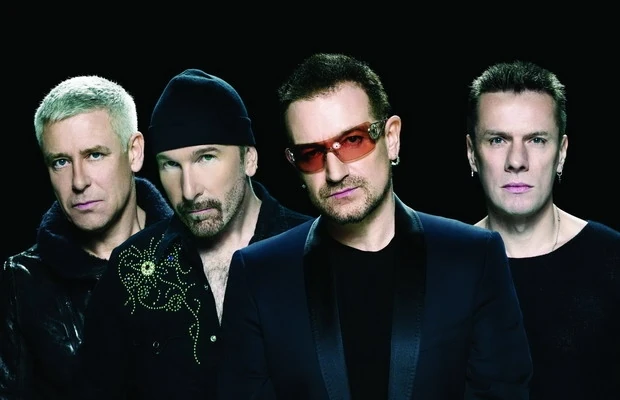
U2

Real Name: Bono, The Edge, Adam Clayton, Larry Mullen Jr.

Date of Birth / Formation: 1976

Age / Status: Active 1976–present

Origin: Dublin, Ireland

Core members / roles: Bono (lead vocals), the Edge (guitar, keyboards, vocals), Adam Clayton (bass), Larry Mullen Jr. (drums)

Studio output: Fifteen studio albums (career total noted in major references)

Commercial awards: One of the world's best-selling acts with roughly 150–170 million records sold; 22 Grammy Awards

Live reputation: Renowned for ambitious, theatrical tours and large-scale live spectacles throughout the 1980s and beyond

U2 is an Irish rock band formed in Dublin in 1976. The group consists of Bono, the Edge, Adam Clayton, and Larry Mullen Jr. Initially rooted in post-punk, U2's sound has evolved to incorporate many genres while maintaining an anthem-like quality built on the Edge's textured guitar and Bono's expressive vocals. Their lyrics often focus on spiritual, social, and political themes. With over 150 million records sold and a record 22 Grammy Awards, U2 is one of the world's best-selling and most acclaimed music artists. They are also known for their elaborate live performances and extensive philanthropic work.

Formation and early development

From a school noticeboard to a Dublin band

U2 started in 1976 when teenage pupils of Mount Temple Comprehensive School in Dublin formed a group after a noticeboard advertisement. Early rehearsals and local gigs led to demos, manager Paul McGuinness, and a major-label contract with Island Records; the lineup of Bono, the Edge, Adam Clayton and Larry Mullen Jr. was established by 1978. [1]

1980s growth: post‑punk roots to stadium anthems

Throughout the 1980s U2 progressed from post‑punk beginnings (Boy, October) to politically charged rock (War) and more expansive, ambient textures with Brian Eno and Daniel Lanois (The Unforgettable Fire). High‑profile concerts, acclaimed live releases and The Joshua Tree (1987) transformed them into international stars and an arena‑sized cultural presence. [1]

Bono (lead vocals); the Edge (lead guitar, keyboards, vocals); Adam Clayton (bass); Larry Mullen Jr. (drums).

UK No. 1 Records

1

DESIRE

Single, 1988, UK [2]

Weeks at No. 1
1
Total chart weeks
13
1

THE FLY

Single, 1991, UK [2]

Weeks at No. 1
1
Total chart weeks
6
1

DISCOTHEQUE

Single, 1997, UK [2]

Weeks at No. 1
1
Total chart weeks
13
1

BEAUTIFUL DAY

Single, 2000, UK [2]

Weeks at No. 1
1
Total chart weeks
22
1

TAKE ME TO THE CLOUDS ABOVE

Single, 2004, UK [2]

Weeks at No. 1
2
Total chart weeks
15
1

VERTIGO

Single, 2004, UK [2]

Weeks at No. 1
1
Total chart weeks
19
1

SOMETIMES YOU CAN'T MAKE IT ON YOUR OWN

Single, 2005, UK [2]

Weeks at No. 1
1
Total chart weeks
12
1

WAR

Album, 1983, UK [2]

Weeks at No. 1
1
Total chart weeks
148
1

THE UNFORGETTABLE FIRE

Album, 1984, UK [2]

Weeks at No. 1
2
Total chart weeks
132
1

THE JOSHUA TREE

Album, 1987, UK [2]

Weeks at No. 1
2
Total chart weeks
201
1

RATTLE AND HUM

Album, 1988, UK [2]

Weeks at No. 1
1
Total chart weeks
65
1

ZOOROPA

Album, 1993, UK [2]

Weeks at No. 1
1
Total chart weeks
34
1

POP

Album, 1997, UK [2]

Weeks at No. 1
1
Total chart weeks
45
1

THE BEST OF 1980-1990 & B-SIDES

Album, 1998, UK [2]

Weeks at No. 1
1
Total chart weeks
20
1

ALL THAT YOU CAN'T LEAVE BEHIND

Album, 2000, UK [2]

Weeks at No. 1
1
Total chart weeks
73
1

HOW TO DISMANTLE AN ATOMIC BOMB

Album, 2004, UK [2]

Weeks at No. 1
3
Total chart weeks
40
1

NO LINE ON THE HORIZON

Album, 2009, UK [2]

Weeks at No. 1
2
Total chart weeks
25
1

SONGS OF SURRENDER

Album, 2023, UK [2]

Weeks at No. 1
1
Total chart weeks
3

Chart summary: U2 achieved 7 UK Number 1 singles and 11 UK Number 1 albums on the main Official UK Singles and Albums Charts. The cards above list each verified chart-topper. [2]

Key milestones (focused on the 1980s)

  1. Band formed

    Larry Mullen Jr.'s noticeboard advertisement led to the first rehearsal and the formation of the group that became U2 in Dublin. [1]

  2. Debut album: Boy

    U2 released Boy, their debut studio album, establishing their post‑punk sound and beginning a steady international touring programme. [1]

  3. October and spiritual themes

    The band's second album, October, foregrounded overt spiritual themes and coincided with intensive touring and internal reflection about faith and identity. [1]

  4. War and commercial breakthrough

    War, featuring singles such as "New Year's Day" and "Sunday Bloody Sunday", debuted at number one in the UK and broadened U2's international profile. [1]

  5. Live reputation consolidated

    Live at Red Rocks and the Under a Blood Red Sky releases captured U2's powerful live act and increased their visibility on MTV and international radio. [1]

  6. New production direction

    Working with Brian Eno and Daniel Lanois on The Unforgettable Fire, U2 adopted more ambient, atmospheric textures and expanded their sonic palette. [1]

  7. The Joshua Tree — international stardom

    The Joshua Tree propelled U2 to global superstardom, yielding major chart hits and cementing their status as one of the decade's defining rock acts. [1]

Then & Now

A concise 1980s snapshot paired with a source-linked status update checked on 17 July 2026.

Then · the 1980s

The profile’s own 1980s timeline captures U2’s era-defining momentum. These late-decade milestones anchor the period in the original profile.

  • New production direction
  • The Joshua Tree — international stardom
Now · 2026 context

Band/act record. The linked Wikidata record does not list U2 as dissolved. MusicBrainz lists Easter Lily EP (3 April 2026) as the newest catalogued ep linked to U2. This conservatively documents catalogue activity without asserting current touring, membership, or a specific 2026 project.

Status source check: Wikidata · MusicBrainz. Release dates are catalogue dates; they do not by themselves establish current touring, membership, or a new 2026 project.

Quotes from Interviews

No short interview quotation was included because an exact, attributable public transcript could not be verified for this profile.

Expanded Song List

Annotations for the profile's listed songs, giving release context, chart peak when confidently known, year, and a brief theme summary.

Sources

  1. U2 — Wikipedia — Primary source for formation, 1980s chronology, personnel, major albums and chart context used in this enrichment.
  2. Official Charts — U2 — Official UK Singles and Albums Chart history, including peaks, chart dates and weeks at Number 1.
  3. Billboard — U2 search — Reference for US chart context and verification of US No. 1 singles mentioned in the timeline and song annotations.
← Back to Charts
Now Playing