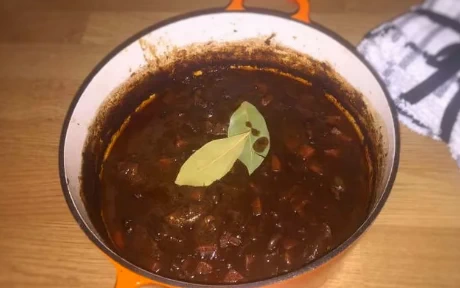
This Beef Stew recipe is warm and comforting on a winter's day. Slow-cooked tender beef in a rich beef gravy is just the thing to keep you warm. Throw in a few dumplings and serve with some homemade crusty bread.
We have used vegetables straight from our garden in this Beef Stew; there is nothing like fresh carrots (they are so sweet), and this recipe comes straight from my childhood. I remember my mum making Stew & Dumplings when I was a boy.
...
History of Beef Stew
Beef stew has a rich and varied history that reflects the culinary traditions of many cultures around the world. Its origins can be traced back to ancient times when people would cook meat and vegetables together in a pot over an open flame, a method that not only tenderized tougher cuts of meat but also allowed flavors to meld beautifully.
As societies evolved, so did the recipes, with different regions adding their unique ingredients and spices. For instance, in France, the classic "boeuf bourguignon" emerged, showcasing the use of red wine and aromatic herbs, while in Ireland, the hearty "Irish stew" became a staple, often featuring lamb or beef alongside root vegetables.
The dish gained popularity during the 19th century, particularly among working-class families who appreciated its affordability and the way it could feed a crowd. Today, beef stew remains a beloved comfort food, with countless variations that reflect local tastes and seasonal ingredients, proving that this humble dish has stood the test of time and continues to warm hearts and bellies alike.
Please read our Ad Policy
Serves: Four
Medium
Cook in: 2hr 20 min
Prep: 30 min
What equipment do you need ?
Our Shop
Cast Iron Pot
Mixing Bowl
Kitchen Scales
Potato Peeler
Related Video
Video may vary from this recipe
What is Beef Stew and Dumplings?
I remember having Beef Stew and Dumplings as a child for a special winter treat. My mum would always make plenty of Beef Stew using up leftover vegetables. The suet dumplings were really a special treat.
In this recipe for Beef Stew, I have tried to stay true to the recipe I remember; you can even use leftover vegetables if you like.
This stew is warm and comforting on a cold winter's day, the perfect winter warmer.
For something a little different, why not try this stew with some mashed potato?
...
Variations of Beef Stew
Beef stew can be prepared in numerous ways, each variation offering a unique flavour profile and texture.
Traditional recipes often include hearty vegetables such as carrots, potatoes, and onions, simmered alongside tender chunks of beef in a rich broth.
However, regional adaptations may introduce different spices, herbs, or even alternative proteins, enhancing the dish's complexity.
For instance, some versions incorporate red wine or stout for depth, while others might feature a medley of seasonal vegetables to reflect local produce.
The versatility of beef stew allows for endless creativity, making it a beloved comfort food across cultures.
For the Dumplings
100 g Self Raising Flour
50 g of Suet
1 Pinch of Salt
75 - 90 ml of Cold Water
For the Stew
500 g Diced Beef
1 Onion (Diced)
1 Leek (Sliced)
80 g Butter
80 g Plain Flour
250 g Diced Carrots
250 g Diced Swede
200 g Diced New Potatoes
200 ml Red Wine
1 Litre of Beef Stock
30 ml Olive Oil
1/2 teaspoon of Black pepper for Seasoning.
For the Stew
Leave the diced beef out at room temperature for 30 minutes.
You will need a good quality Cast Iron Casserole Dish (flameproof) for this, or you can do it in a large pan, but I prefer a good old Casserole Dish.
Heat the butter for a minute, then cook the onion and leek in the butter until soft.
Cook the diced beef in the same pot. Coat the beef with the flour, cover, and simmer until the beef is no longer pink (about 10 minutes).
Meanwhile, bring the carrots, swede, and potatoes to a boil in a pan of water, then simmer for 20 minutes.
Drain the water from the vegetables, then add the vegetables to the beef once the beef is no longer pink.
Using 3 beef stock cubes, make up 1 litre of stock.
Add the red wine and the beef stock to the pot and mix with a wooden spoon.
Cover and put the Casserole Dish in a preheated oven at 150°C for 2 hours.
Once the stew has been cooking for 2 hours, it is time to drop your dumplings into the pot as well.
Cook in the oven for another 20 minutes so that the dumplings are risen and fluffy.
You can put this in a slow cooker on warm and keep overnight; it will taste glorious the following day.
For the Dumplings
Sieve the flour into a mixing bowl.
Add the suet and the salt.
Mix in the water with a fork until you have a soft dough.
Turn out onto a board and knead for a few minutes.
Divide into 8 and roll into small balls.
Please read our Ad Policy
Chef's Tips for Making Beef Stew
Is this Beef Stew recipe suitable for a slow cooker?
Beef stew is indeed well-suited for preparation in a slow cooker. The slow-cooking process allows the flavours to meld beautifully while tenderizing the meat, resulting in a rich and hearty dish.
What type of beef is best for Beef Stew?
Cuts such as chuck roast, brisket, or round are particularly well-suited for this dish, as they contain sufficient marbling and connective tissue that breaks down over time, resulting in a rich and flavourful stew.
How do I store leftover Beef Stew?
To properly store leftover beef stew, allow it to cool to room temperature before transferring it to an airtight container. Label the container with the date to keep track of its freshness, and place it in the refrigerator if you plan to consume it within a few days.
Can you freeze Beef Stew?
Yes, beef stew can be frozen for later use. To ensure the best quality, it is advisable to cool the stew completely before transferring it to airtight containers or freezer bags. Properly stored, beef stew can maintain its flavour and texture for up to three months in the freezer.
How do I know when Beef Stew is done?
To determine when beef stew is fully cooked, you should check the tenderness of the meat and the overall consistency of the dish. The beef should be fork-tender, meaning it can be easily pierced with a fork, indicating that the connective tissues have broken down properly.