1980s Online Navigation Banner

Van Halen

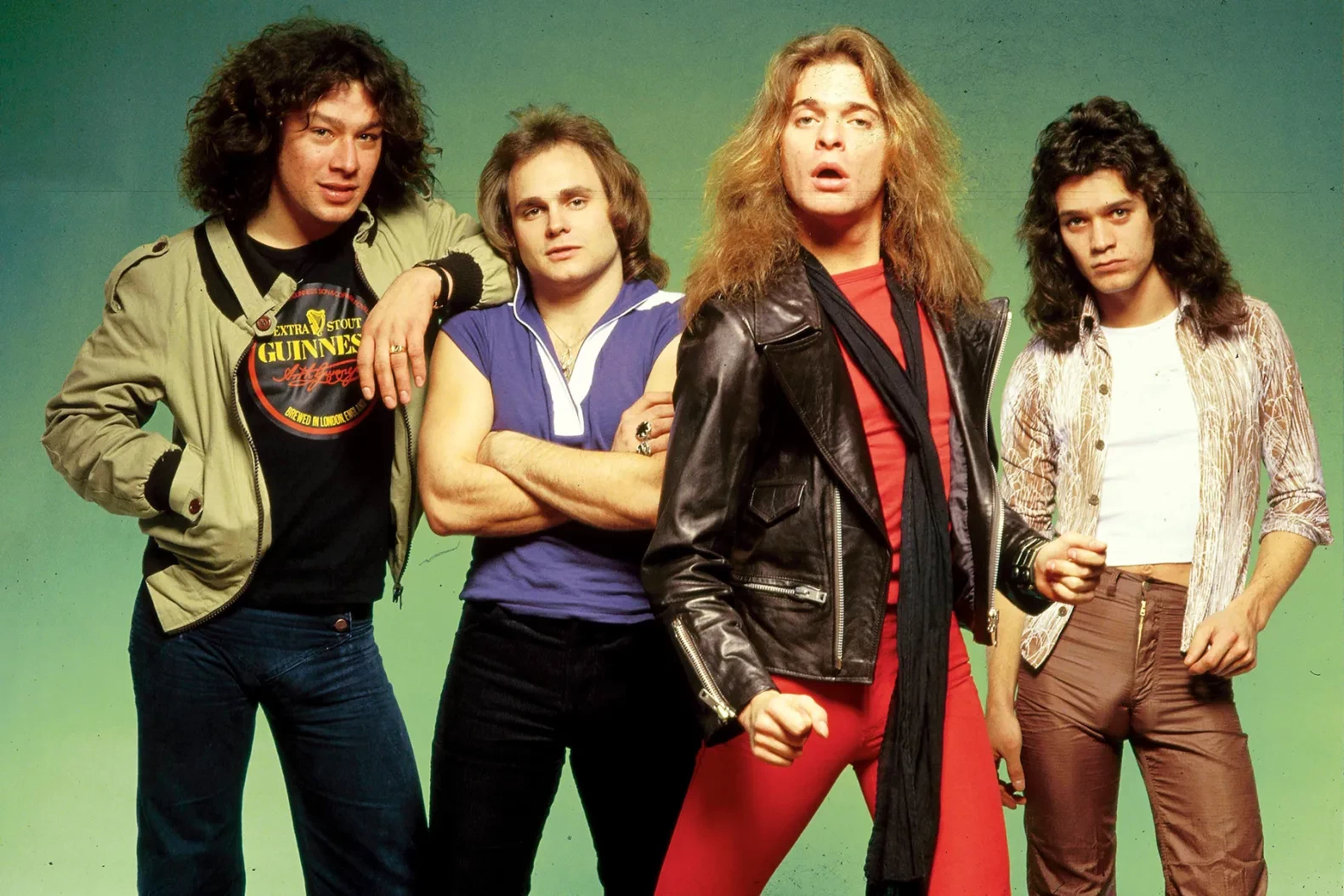
Van Halen’s classic 1984 lineup: Alex Van Halen, David Lee Roth, Eddie Van Halen and Michael Anthony

Real Name: Van Halen

Date of Formation: 1972

Age / Status: Active 1972–2020

Origin: Pasadena, California, United States

Core members: Eddie Van Halen (guitar, keyboards, backing vocals), Alex Van Halen (drums), David Lee Roth (lead vocals) and Michael Anthony (bass, backing vocals)

Primary style: Hard rock rooted in high-impact guitar riffs, powerful rhythm playing, melodic hooks and arena-scale performance

Notable milestone: “Jump” became the group’s only US Billboard Hot 100 No. 1, beginning a five-week run at the summit in 1984

Commercial reach: Multi-platinum catalogue including Van Halen, 1984, 5150 and OU812

Van Halen were an American rock band formed in Pasadena in 1972. Their classic early lineup — Eddie Van Halen, Alex Van Halen, David Lee Roth and Michael Anthony — transformed Southern California club energy into a new mainstream hard-rock language: athletic, melodic, flamboyant and technically daring. Eddie Van Halen’s guitar work, notably his two-handed tapping and expressive vibrato-bar approach, became one of the defining instrumental voices of the era. In the 1980s, the band combined arena-sized riffs with crossover hooks on 1984, then successfully reinvented itself with singer Sammy Hagar on 5150 and OU812.

Origins and rise

Pasadena beginnings to a classic lineup

The Van Halen brothers built their early groups in Pasadena before David Lee Roth joined as frontman and Michael Anthony completed the familiar four-piece lineup. Their 1978 self-titled debut established the first era: Eddie’s fluid, high-impact guitar playing, Alex’s forceful drumming, Anthony’s melodic bass and harmony vocals, and Roth’s irreverent showmanship. [1] [4]

1980s breakthrough and a second era

By 1984, Van Halen had expanded its sound without losing its rhythmic punch. 1984 delivered “Jump,” their biggest US single, while “Panama” and “Hot for Teacher” became MTV staples. After Roth departed in 1985, Sammy Hagar joined; the band opened a successful new phase with the US No. 1 albums 5150 and OU812. [3] [5] [6]

Eddie Van Halen — guitar, keyboards and backing vocals; Alex Van Halen — drums; David Lee Roth — lead vocals; Michael Anthony — bass and backing vocals. Sammy Hagar became lead vocalist in 1985, beginning the band’s second major era.

US No. 1 Records

1

JUMP

Single, 1984, US [3]

Weeks at No. 1
5
Chart
Billboard Hot 100
1

5150

Album, 1986, US [5]

Peak
No. 1
Chart
Billboard 200
1

OU812

Album, 1988, US [6]

Peak
No. 1
Chart
Billboard 200

Chart summary: “Jump” was Van Halen’s sole US Billboard Hot 100 No. 1 single. The band also launched its Sammy Hagar era with consecutive US Billboard 200 No. 1 albums, 5150 and OU812. [3] [5] [6]

Key milestones

  1. Band forms in Pasadena

    The Van Halen brothers’ project developed in Pasadena before David Lee Roth and Michael Anthony completed the classic early lineup. [4]

  2. Debut album breakthrough

    Van Halen brought the band’s high-energy sound to a wide audience and established Eddie Van Halen as a major new guitar voice. [1] [4]

  3. Hard-rock catalogue expands

    Women and Children First, Fair Warning and Diver Down strengthened the group’s reputation for muscular riffs, energetic live playing and a distinctive sense of humour. [4]

  4. “Jump” becomes a landmark hit

    The lead single from 1984 reached No. 1 on the US Billboard Hot 100 and stayed there for five weeks. [3]

  5. Sammy Hagar joins; 5150 tops the chart

    Van Halen began a new vocal era and scored its first US Billboard 200 No. 1 album. [5]

  6. OU812 continues the momentum

    The follow-up became a second consecutive US No. 1 album and added “When It’s Love,” “Finish What Ya Started” and “Feels So Good” to the band’s hit catalogue. [6]

Then & Now

A concise 1980s snapshot paired with a source-linked legacy update checked on 17 July 2026.

Then · the 1980s

Van Halen’s defining 1980s arc moved from the Roth-era peak of 1984 to a commercially successful second phase with Sammy Hagar. Both eras are central to the group’s hard-rock legacy.

  • “Jump” reaches US No. 1
  • 5150 and OU812 top the US album chart
Now · legacy context

Band legacy. Eddie Van Halen died in October 2020; the following month, Wolfgang Van Halen confirmed that the band had disbanded. The recordings continue to influence hard rock, guitar technique and the music-video era. [4]

Status source check: Van Halen chronology · Rock & Roll Hall of Fame. Historical source links document the group’s legacy; they do not assert a current touring or release project.

Quotes from Interviews

No short interview quotation is included because an exact, attributable public transcript has not been verified for this profile.

Expanded Song List

Annotations below give release context, verified chart notes where available, release-year labels and concise thematic descriptions.

Sources

  1. Rock & Roll Hall of Fame — Van Halen — induction, personnel and musical impact.
  2. RIAA Gold & Platinum — Van Halen search — catalogue certification records.
  3. The Current / Minnesota Public Radio — “Jump” hits No. 1 — chart milestone for “Jump.”
  4. Van Halen — Wikipedia — transparent secondary cross-check for lineup, timeline and discography; verify key claims against higher-authority sources before publishing where feasible.
  5. 5150 — Wikipedia — transparent secondary cross-check for release and chart context.
  6. OU812 — Wikipedia — transparent secondary cross-check for release, chart and song context.
  7. Billboard — Van Halen artist profile — chart-history reference.
Now Playing