SYNTH GODS & DRUM MACHINES
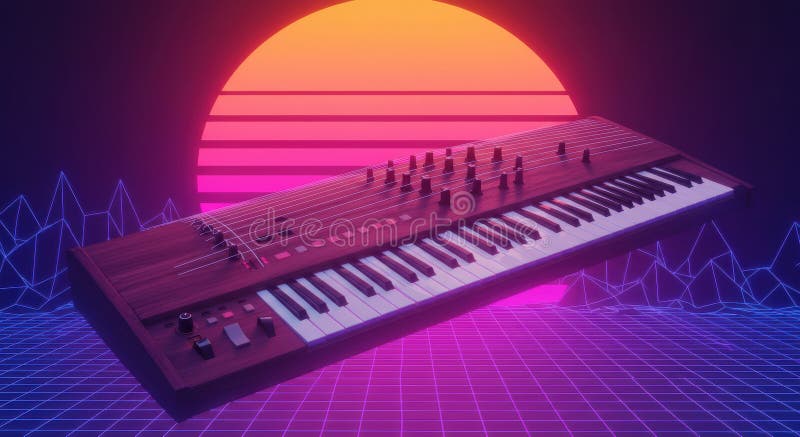

Across the United Kingdom, a silent revolution has taken place in bedrooms, garages, and professional recording studios alike. The traditional rock band setup — drums, bass, rhythm guitar, and lead guitar — has been entirely subverted. In its place sits a lone figure hunched over a bank of plastic keys, surrounded by a tangle of MIDI cables and the glowing LED displays of rack-mounted samplers. The synthesizer is no longer a novelty instrument used for sound effects; it is the undisputed king of the charts.
To understand how we arrived at this point in 1986, we have to look back at the late 1970s. Punk rock had cleared the board, stripping music back to its raw, aggressive essentials. But as punk gave way to post-punk and new wave, a generation of musicians realised that the guitar had limitations. It had historical baggage. The synthesizer, however, represented the future — a blank slate, capable of producing sounds that had never existed in nature.
Pioneers like Gary Numan and The Human League were among the first to prove that you didn't need a traditional rock setup to command an arena or top the charts. Numan's 'Are "Friends" Electric?' and 'Cars' were cold, alienated, and utterly compelling. They sounded like the soundtrack to a dystopian sci-fi film, yet they resonated with millions of teenagers sitting in suburban Britain. The Human League's 'Dare' album took this synthetic sound and injected it with pop sensibility, proving that electronic music could be warm, melodic, and incredibly successful.
But the real shift occurred with the introduction of two crucial pieces of technology: MIDI (Musical Instrument Digital Interface) and affordable programmable drum machines. Before MIDI, getting two synthesizers from different manufacturers to communicate was a nightmare of proprietary control voltages and trigger pulses. MIDI, introduced in 1983, changed everything overnight. Suddenly, a single musician could control an entire bank of synthesizers from one master keyboard — the musical equivalent of the industrial revolution.
At the heart of this new electronic ecosystem is the drum machine. Early rhythm boxes were primitive affairs, offering preset bossa nova or waltz rhythms designed to accompany home organists. But machines like the Roland TR-808 and the LinnDrum changed the paradigm entirely. They allowed musicians to program their own complex, relentless beats. These machines never showed up late to rehearsal, never argued about royalties, and delivered a driving pulse perfectly suited to the burgeoning dance club scene.
Critics, of course, have been quick to dismiss electronic music. The Musicians' Union famously tried to ban synthesizers from recording sessions, arguing that they were putting 'real' musicians out of work. Rock purists complain that synth-pop is soulless, lacking the raw emotion and physical exertion of a live rock band. They argue that pressing a button to trigger a sequence is not 'playing' an instrument in any meaningful sense.
But this criticism entirely misses the point. The emotion in electronic music isn't conveyed through the physical bending of a string; it's conveyed through the careful manipulation of timbre, filter cutoffs, and envelope shapes. Listen to the soaring, melancholic chords of Orchestral Manoeuvres in the Dark, or the booming, gated snare of a Phil Collins track, and tell us you don't feel anything. The emotion is there; it's simply being expressed through a different medium.
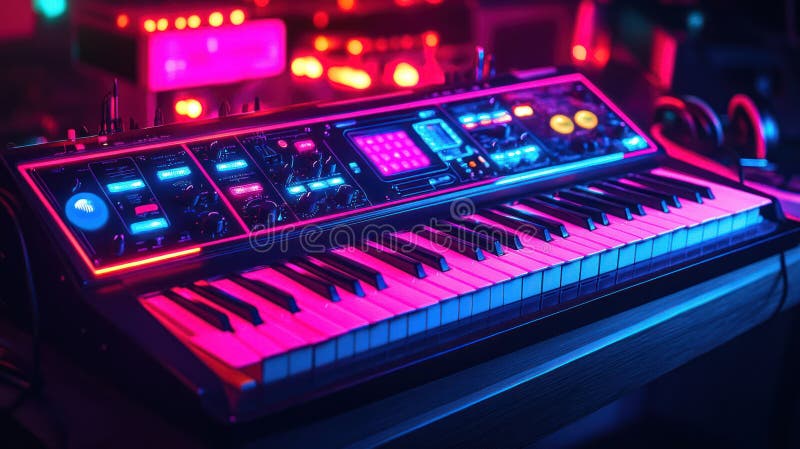
Today, in 1986, the landscape is dominated by bands like Depeche Mode, New Order, and Pet Shop Boys. Depeche Mode, hailing from Basildon, have evolved from writing bouncy, lightweight pop tunes into crafting dark, industrial soundscapes. Their use of sampling — recording everyday sounds like hitting corrugated iron or starting a motorcycle engine and playing them back via a keyboard — has pushed the boundaries of what constitutes a musical instrument.
New Order, formed from the ashes of Joy Division, have achieved the perfect synthesis of rock and electronic dance music. Tracks like 'Blue Monday' rely heavily on sequenced basslines and drum machines, yet they retain a raw, human vulnerability thanks to Bernard Sumner's fragile vocals and Peter Hook's distinctive high-register bass playing. The record was, famously, so expensive to manufacture that Factory Records lost money on every copy sold — a fact that has done absolutely nothing to diminish its legendary status.
The Pet Shop Boys, meanwhile, represent the logical endpoint of the synth-pop trajectory: pure, unashamed pop music constructed entirely from electronic components, delivered with an arch, knowing wit that sets them apart from the more earnest acts in the genre. Neil Tennant's deadpan vocal delivery over Chris Lowe's immaculate productions is the sound of the decade's contradictions laid bare — simultaneously ironic and deeply sincere.
Even established rock acts have been forced to adapt. Bruce Springsteen, ZZ Top, and Van Halen have all incorporated heavy synthesizer use into their recent albums to ensure they remain relevant on MTV and FM radio. The Yamaha DX7, with its distinctive FM synthesis sound, is ubiquitous. Its preset sounds — particularly the 'E. PIANO 1' and 'BASS 1' — are the sonic wallpaper of the decade, appearing on everything from power ballads to advertising jingles.
Looking ahead, the technology is only getting cheaper and more powerful. Samplers, once the preserve of millionaire rock stars, are dropping in price, allowing bedroom producers to slice up and rearrange existing records. This is giving birth to entirely new genres of music, heavily reliant on the manipulation of recorded sound rather than the creation of new sounds from scratch. The implications for the music industry are profound and, for many traditional musicians, deeply unsettling.
The synthetic revolution is complete. The machines haven't just taken over the studio; they've provided the soundtrack for a generation navigating the complexities of the Cold War, mass unemployment, and the dawn of the information age. It is a sound that is simultaneously cold and deeply emotional, robotic yet undeniably human. It is the sound of tomorrow, today.